One of our bucket list items was to see turtles along our KZN Coast. The turtle sanctuary at Bhanga Nek, in the Kosi Bay region, is the ideal spot if you don’t mind a bit of a walk on the beach. We found a local guide, booked a spot at the Bhanga Nek Tent camp, and went in search of turtles.
While there are various turtles that nest along this coastline from November to March – among them Green Turtles, Loggerhead Turtles and Leatherback Turtles – seeing them on the beach is never guaranteed. 
Read on to find out what we saw …

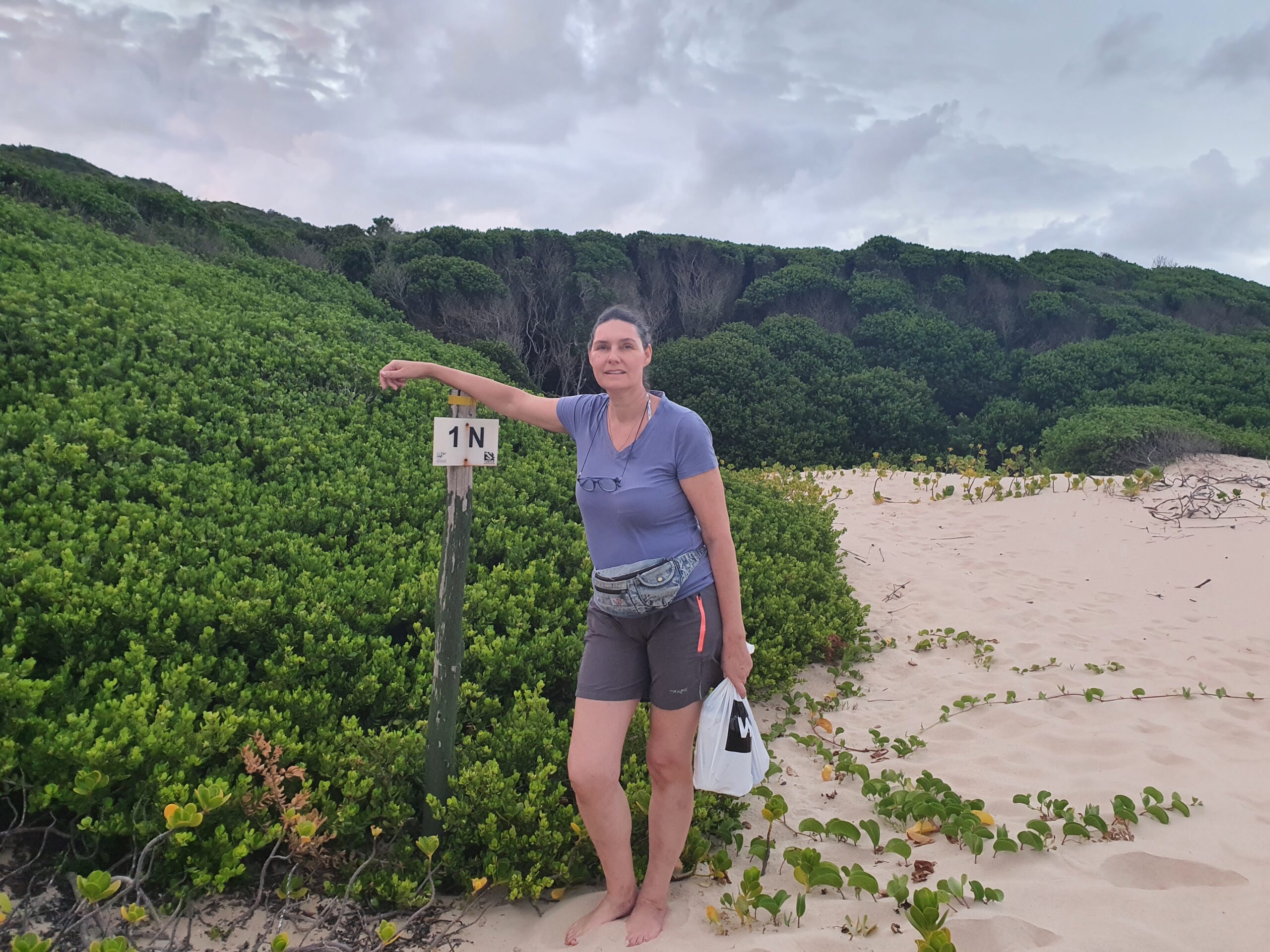
Person standing on beach with arms wide, turtle tracks on foreground.
For scale, I'm about 184cm tall.

Sodwana Bay area

To break the 6 hour journey from our home to Bhanga Nek, we decided to stop over in Sodwana Bay. We hoped to do some snorkeling at Sodwana, but we got there at the wrong tide and couldn’t do much more than walk around on the rocks. I’d read on another website forum that Sodwana Bay rock pools had been pillaged  and were now barren. It certainly looked that way. Such a sad sight!

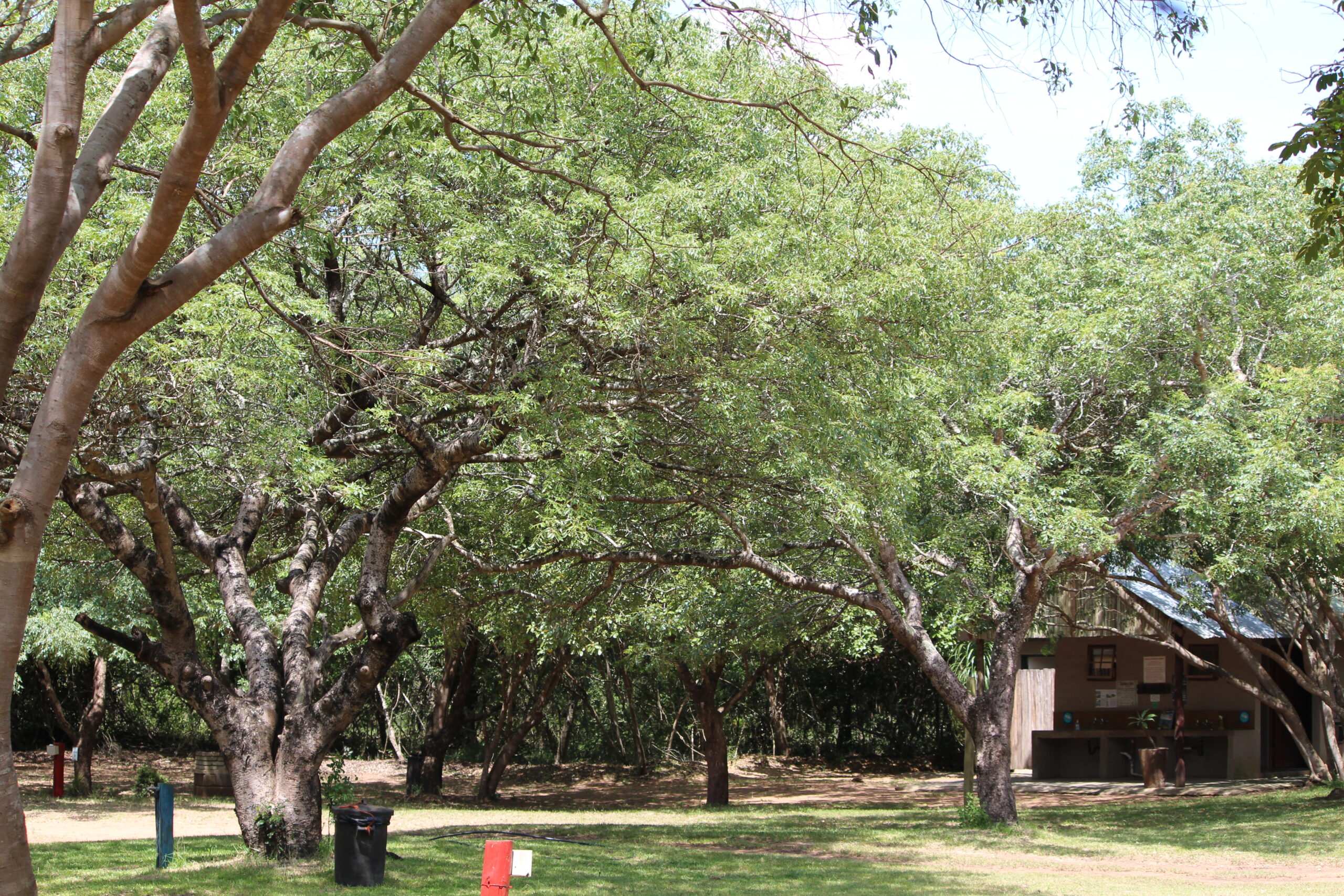
Our accommodation for the night was much more pleasing. Flat Cat Accommodation is situated around 5 km from Sodwana Bay beach. Self Catering Chalets, a Caravan Park and Camp Site are on offer, with 4 luxury and 8 standard stands. Out of season, the park was quiet, and we had the ablutions to ourselves. 

Camping options at Flat Cat

Luxury Stands
– Scullery
– Shower
– Toilet

Standard Stands
– Shared ablution facilities (spotless)

All Stands Include
–  Access to electricity.
–  1 Power point per stand.
–  Fresh water at each stand

Services
Assistance for setting up camp. Cleaning facilities for boat, trailer,
diving gear, tackle, fish. Assistance upon request.

Accommodation at Flat Cat

Self Catering Chalets

Marlin Flat
–  2 Bedrooms (2 Persons per room)
–  1 double bed and 2 single beds

Sailfish Villa
–  2 Bedrooms (6 Persons)
–  1 Double bed (air-con and ceiling fan)
–  4 Single beds (celing fans)

Services for Self Catering Chalets:
– 24 Hour security fence
– Safe and secure parking for boat, trailer and vehicle.
– Cleaning facilities for boat, trailer, diving gear, tackle and fish.
– Assistance with any of the mentioned on request

Bhanga Nek

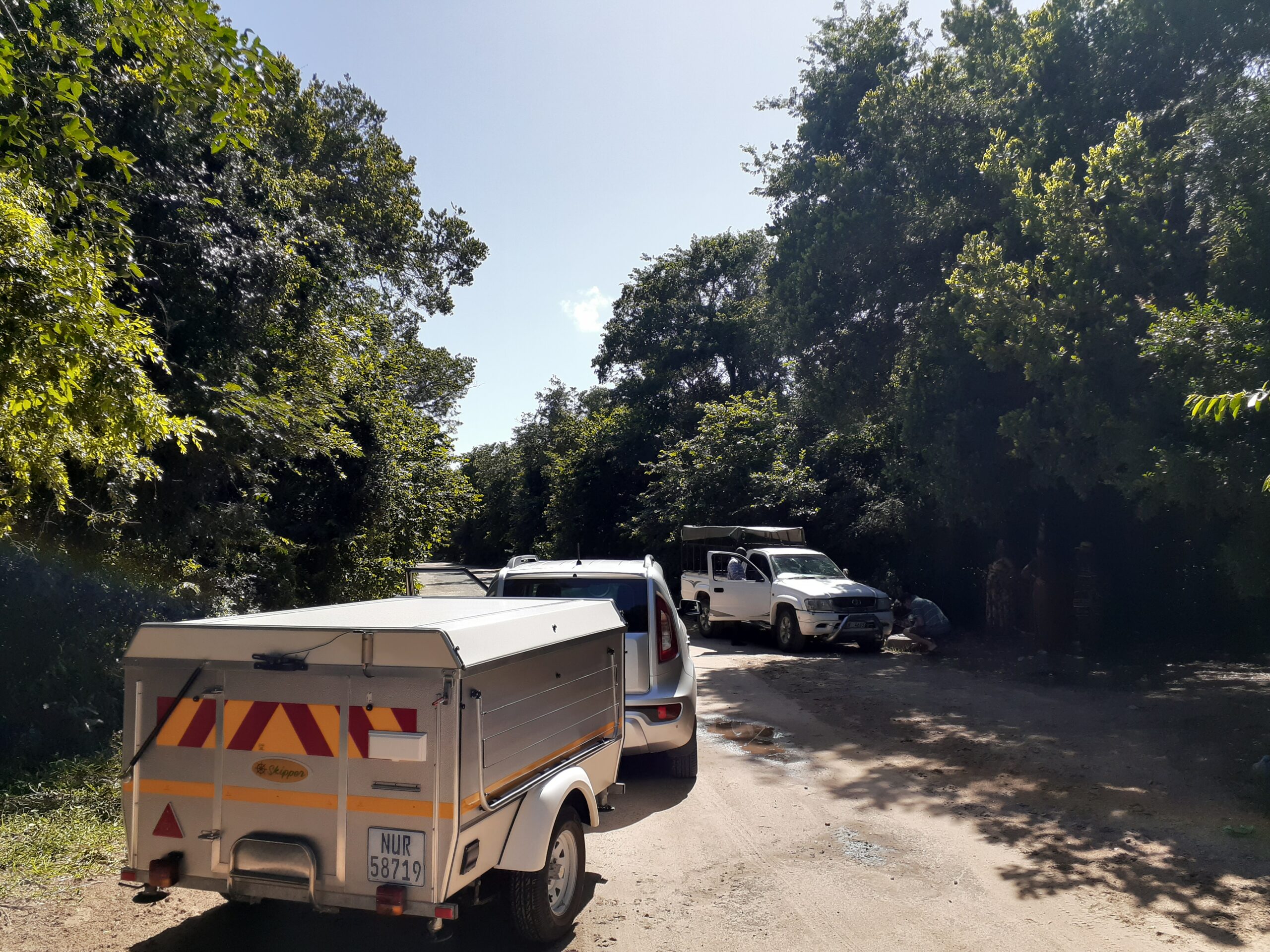
The road to Bhanga Nek used to be “4×4 only”, which put this extraordinary destination out of reach for many of us with “normal cars”. Things have improved somewhat, as the soft sand track has been replaced with a narrow, hard-surfaced dirt road.  There is a section of a few kilometres which is badly corrugated. Tom the Kia Sould was muttering to himself, and we found out the hard way that travelling with unprotected raw eggs in the fridge is not a good idea – if you must take fragile food items, make sure they are securely packed.
While there are a handful of camps on the area, only two of these are accessible without a 4×4.
We thus had the choice of Joel’s camp (about 600m from the beach) or Tent camp (just behind the dune vegetation, about 30m from the beach).

This is off-grid camping, as rustic as you are likely to get. No generators allowed, but we took our new battery packs and solar charger.

About Bhanga Nek

Bhanga Nek, in the Maputaland Turtle Sanctuary, is set in the far north-eastern corner of KZN, about 15km south of the Mozambique border on the southern shore of the 3rd lake of the Kosi Lake system.
The responsible authorities here are the Isimangaliso Wetland Authority and Ezemvelo KZN Wildlife.

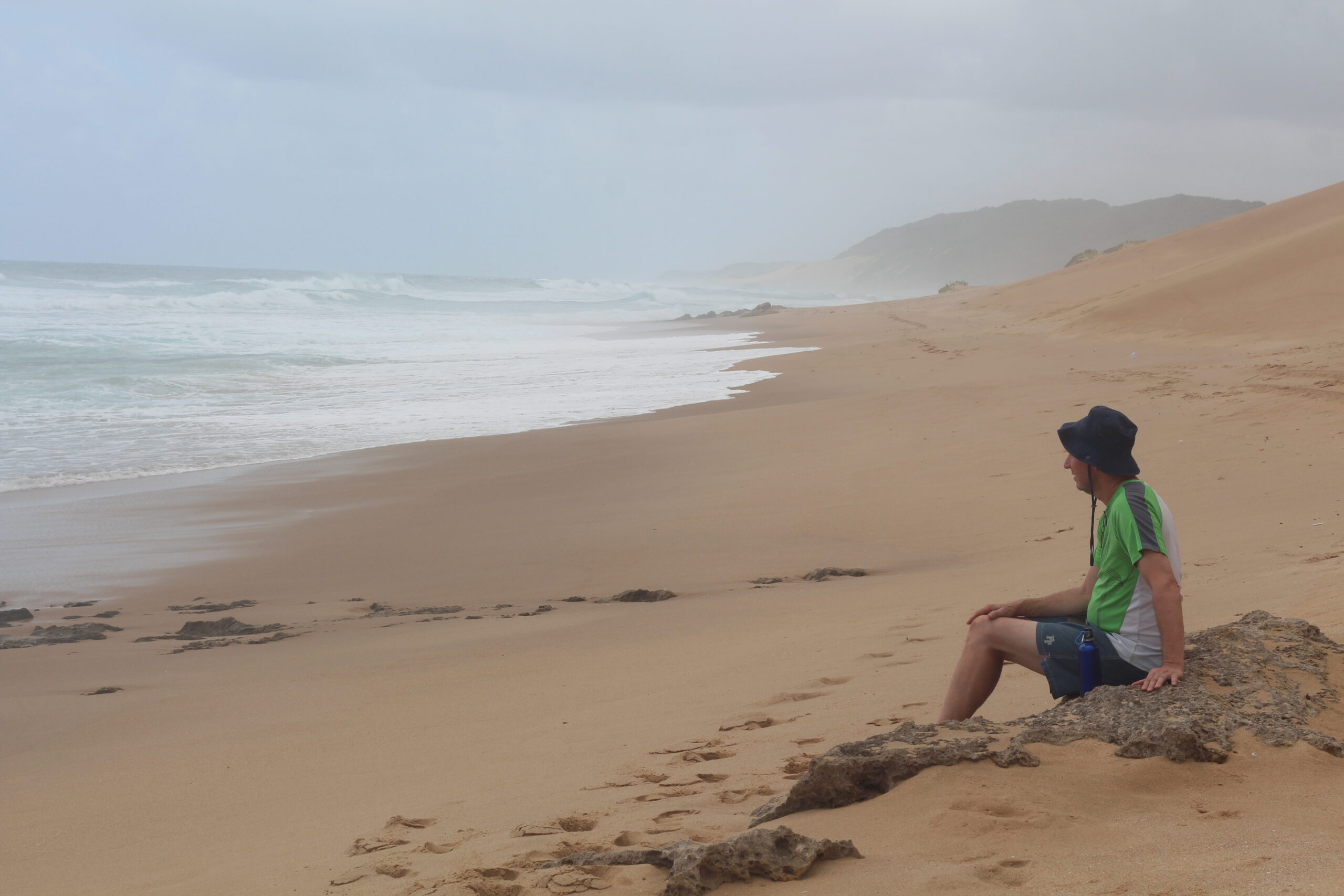
The whole area is basically a huge sand dune, with dune forest and grasslands. It has no electricity supply and no big shops, but there are two spaza shops, a beautiful bay and beach with good fishing, snorkeling and beaching.

Bhanga Nek is not your ordinary holiday resort. It is set within a rural area. There are no luxuries, but there are hot water showers and flush toilets at all the camps.

Contact Jenny at Extreme Nature Tours for bookings and information:
Email: jenny.reservations@vodamail.co.za
Tel: 082-857 3363

Turtle Viewing

The nesting and hatching of turtles are wonderful nature-events to watch.
Early in the summer, female sea turtles come back to the beach they were hatched on, and come onto the beach at night to lay their eggs. Around 65 days from laying, the little hatchlings emerge to begin their perilous journey to the ocean.

During turtle season at night, members of the public are not allowed to go onto the beach without a turtle guide. Local turtle guides hold concessions to take visitors onto the beach at night on turtle walks.

Our guide was incredibly knowledgeable about the various turtles that nest along this coastline. During our turtle viewing walk, he walked along the dunes searching for emerging hatchlings, while we stayed at the water’s edge on the lookout for turtles coming on to the beach.

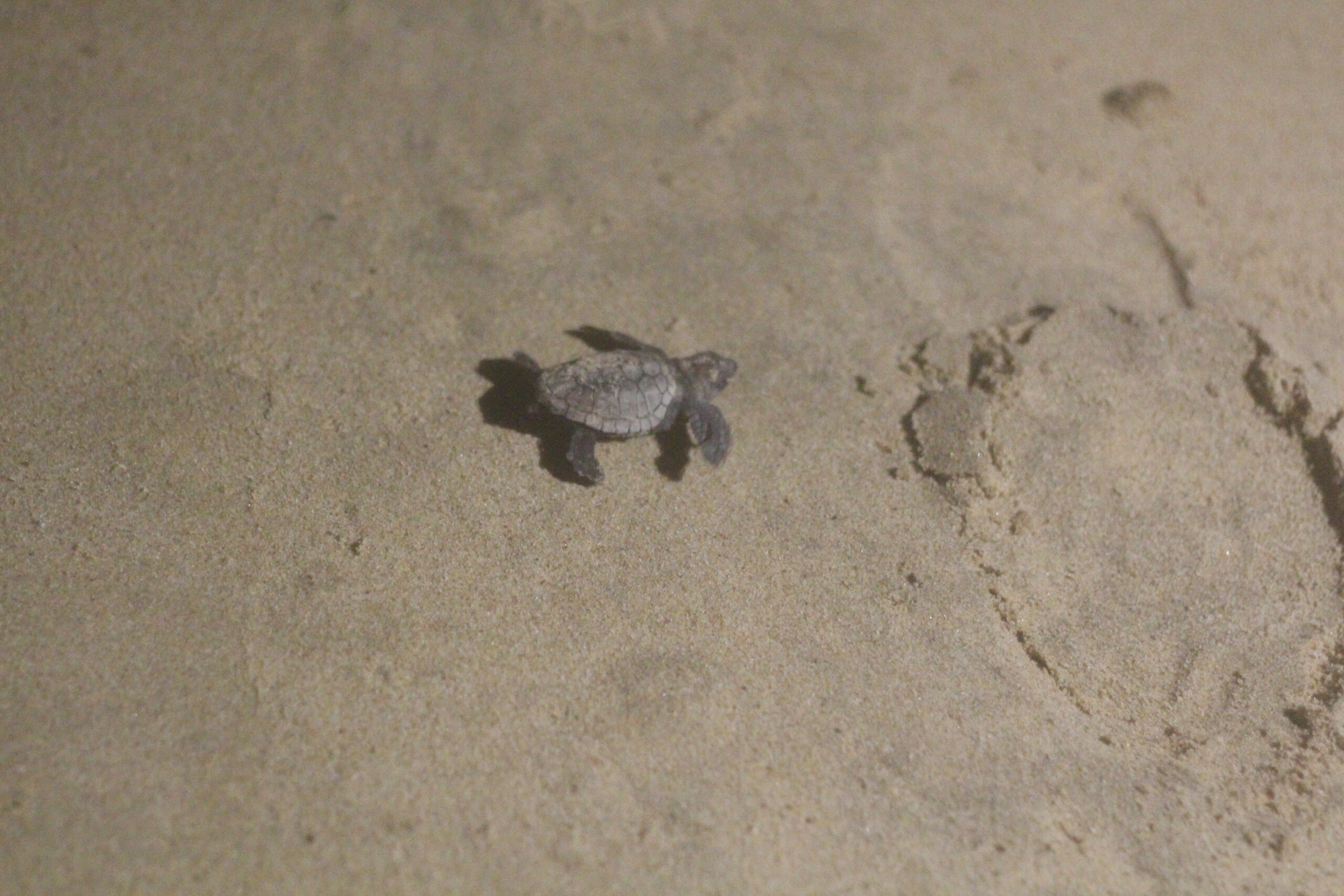
We had almost reached the end of the designated tour area before finding hatchlings, which we watched as they headed for the ocean. I don’t know if our cheers and prompting helped them at all! We then turned around and headed back to base and had almost given up hope of seeing anything more when our guide stopped us and indicated the leatherback moving on the sand behind him! So much excitement! There are currently only 80 known leatherbacks that nest along this section, so this was an incredibly special sighting.
We arranged our turtle tour with Agrippa at Okhanda TOURS
Tel: +27 76 046 6674
Email: okhandatours@gmail.com

Bahati Caravan Park & Game Farm

Leaving the rustic beauty of Bhanga Nek behind us, we headed southwards to Hluhluwe. We planned to stay at Bahati for a couple of nights and visit the Hluhluwe-iMfolozi park from there.

Bahati Caravan Park offers an ‘Out of Africa’ experience on a privately owned game farm in the heart of Zululand.

This tranquil caravan park offers 12 beautiful shaded grassy stands, all equipped with 220 volt plug points, water taps close to stands, a communal washing up area and 4 family ablutions with showers, all serviced daily. There are also 7 luxury undercover en-suite stands with own kitchen, bbq braai and a boma firepit. Self-catering Chalets also available. Nyala, red duiker and crested guinea fowl graze languidly past your caravan or tent.

Guests can enjoy the swimming pool area, thatched lapa with bbq and “potjie kos” facilities and a fire pit. Everything you need is available in Hluhluwe, in close proximity to Bahati.

The game farm features a wonderful diversity of vegetation, including sand forest, Ravine, Ilala palms, Fever trees and plenty of open Thornveld. The game farm is home to animals such as Zebra, Impala, Nyala, Common Reedbuck, Grey and Red Duikers, Warthog, Bushpig, Civet, Genet, and many other small species. There are also many interesting hiking trails amongst the natural vegetation. Bahati Caravan Park is a family run establishment.
Book on their website or get in touch directly:
Cell: +27 (0)72 190 0224

Our experience

We came here mostly to use it as a base for visiting Hluhluwe-iMfolozi park, but Bahati offers a pleasant game-viewing experience of its own.

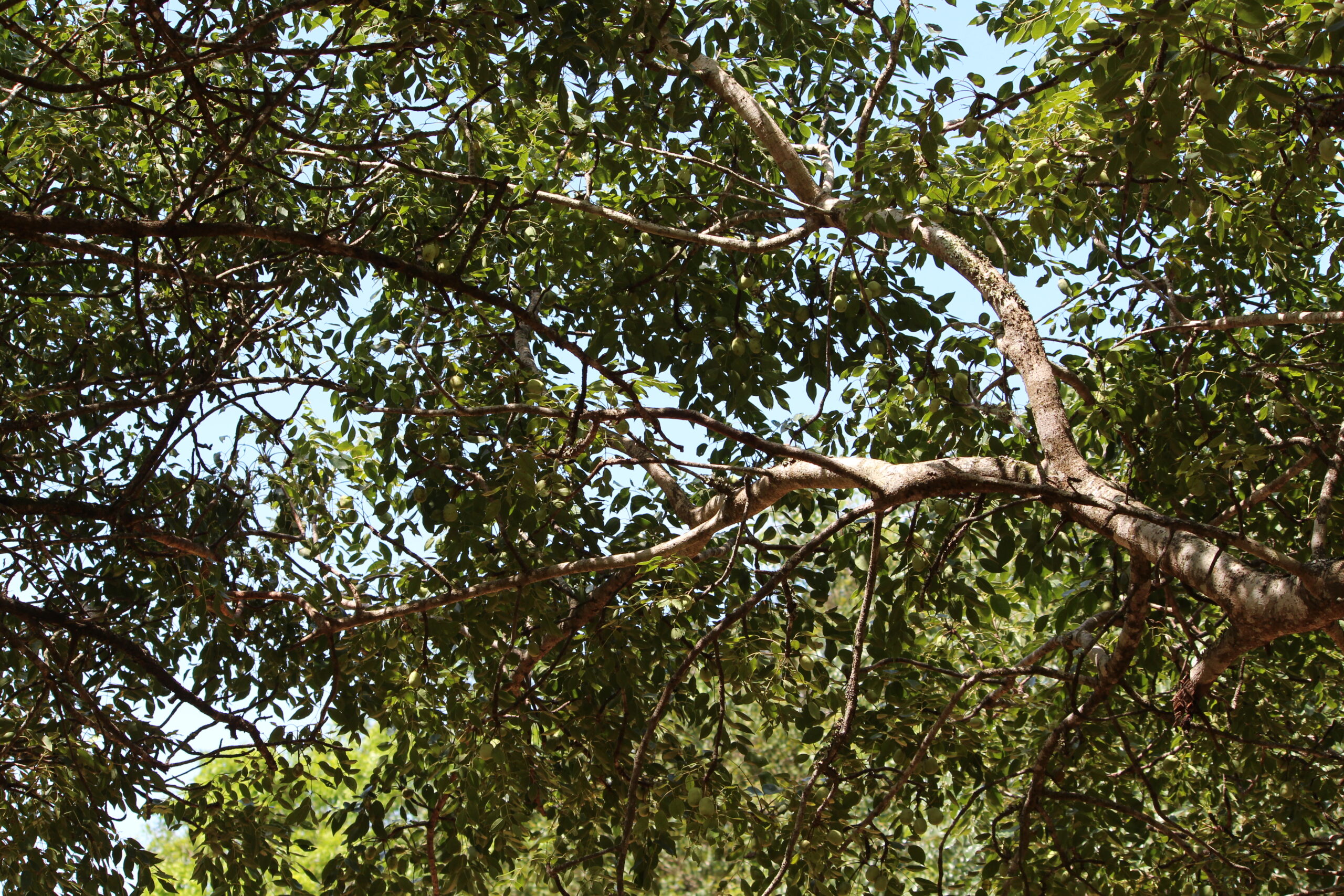
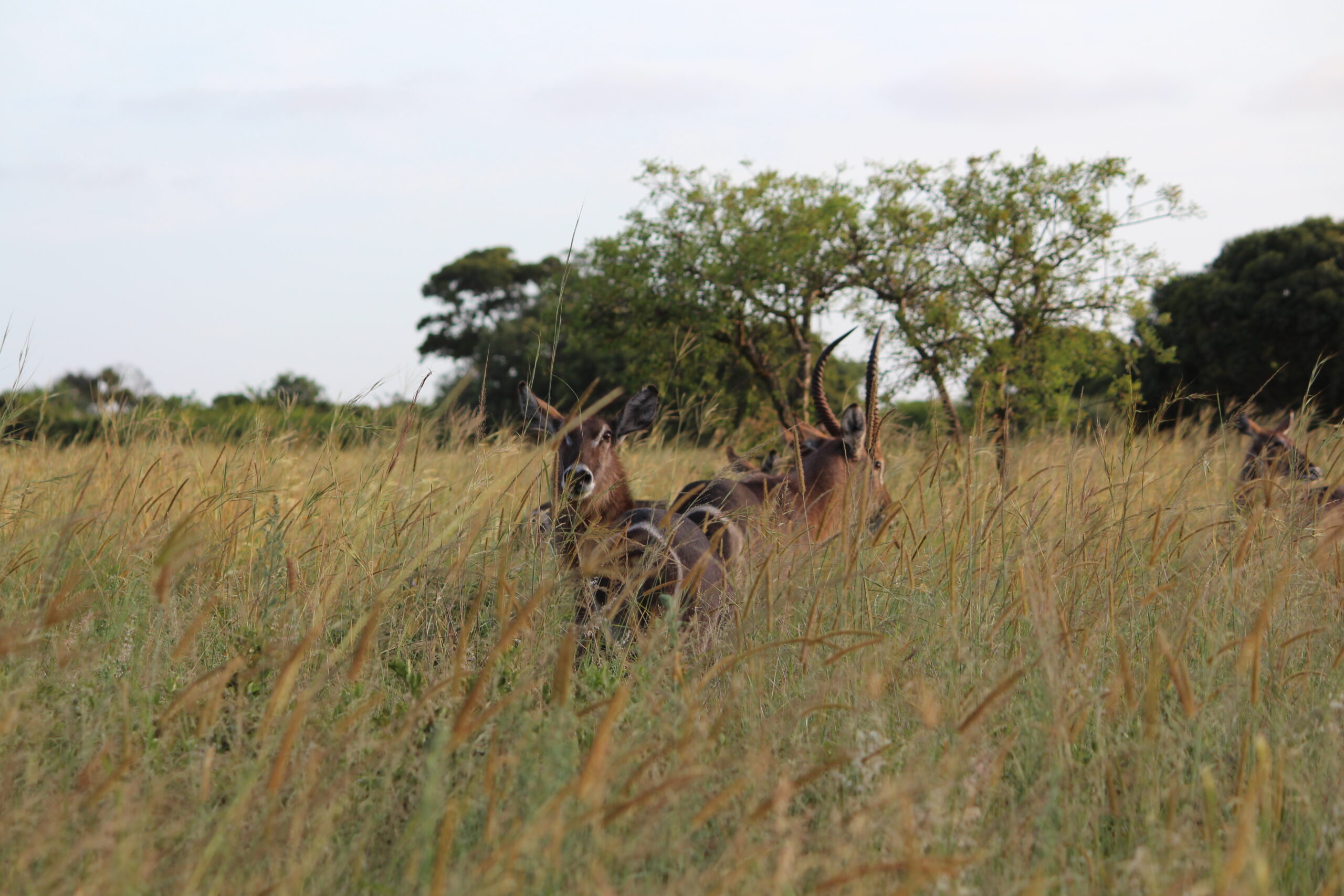
The sand tracks were a little daunting for Tom, so we didn’t get to see as much of the reserve as we could have, but the “bokkies” wandering around the camp site were fun to watch. I put down my towel and parked myself in the shade of a marula tree! Collected some freshly fallen fruit which went home and became Marula Jelly … yum! 

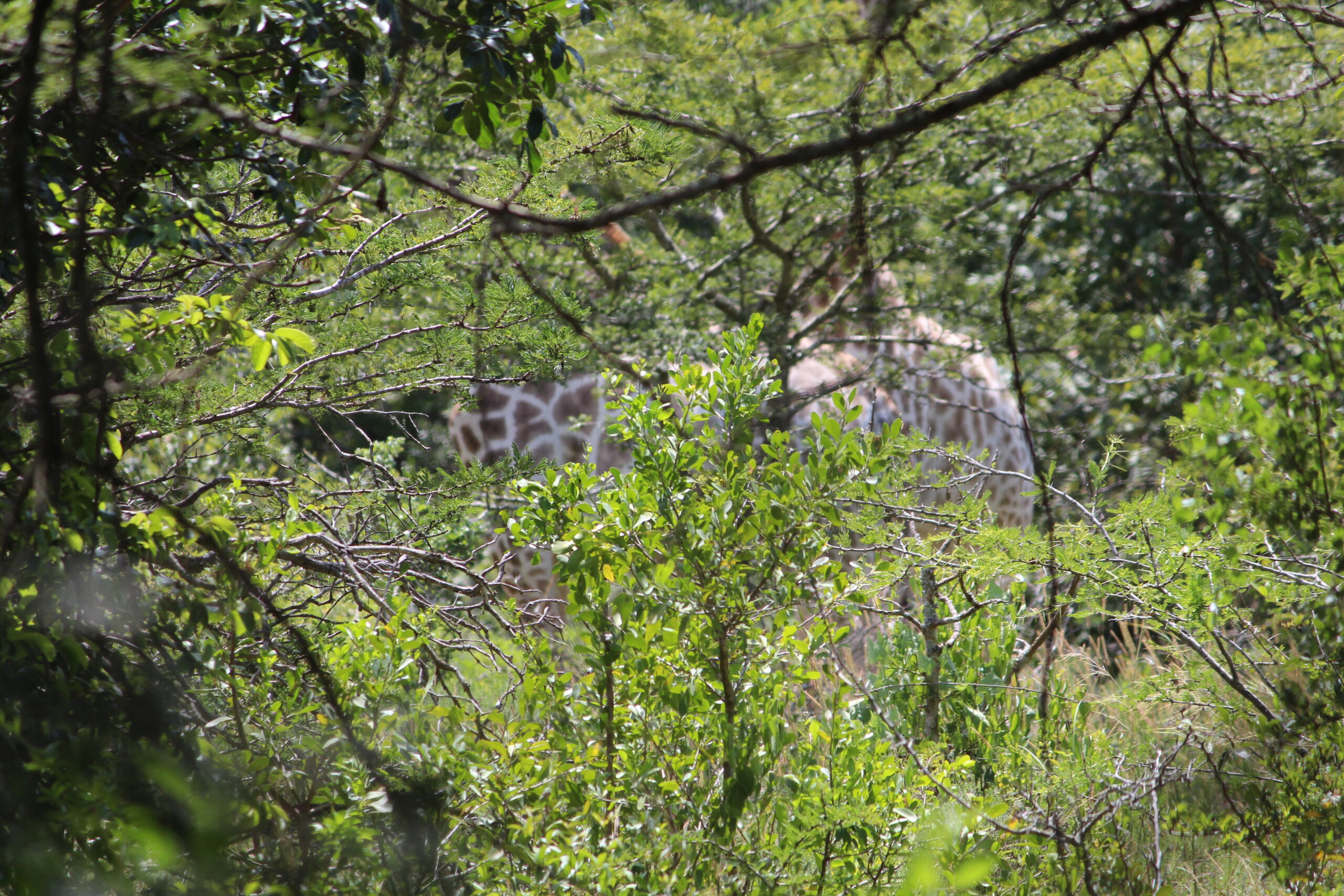
I spotted a couple of giraffe through the trees just beyond the camp site, but we couldn’t get close enough for a proper photo. 

We enjoyed our dinner at the pool area before a passing raincloud sent us scurrying back to dryness, lol!

We spent two nights at Bahati, planning to head to St Lucia afterwards, but found ourselves in the middle of a heatwave and decided that if we were going to be sweaty and lethargic, we might as well do it at home!

Hluhluwe-iMfolozi Game Reserve

Mid-summer is never the best time to visit a game reserve! And after a good rain such as we had recently, the tall grass and dense vegetation make game-viewing almost impossible. But since we were in the area, we decided to visit anyway.
Nevertheless, we were treated to a few half-decent sightings, starting with a herd of buffalo chasing off a lazy lion, quite near to the Memorial Gate entrance. I think we can all take lessons from those buffs …

The roads were rather uncomfortable for Tom, which had us (once again!) discussing the possibility of trading up to a 4×4.

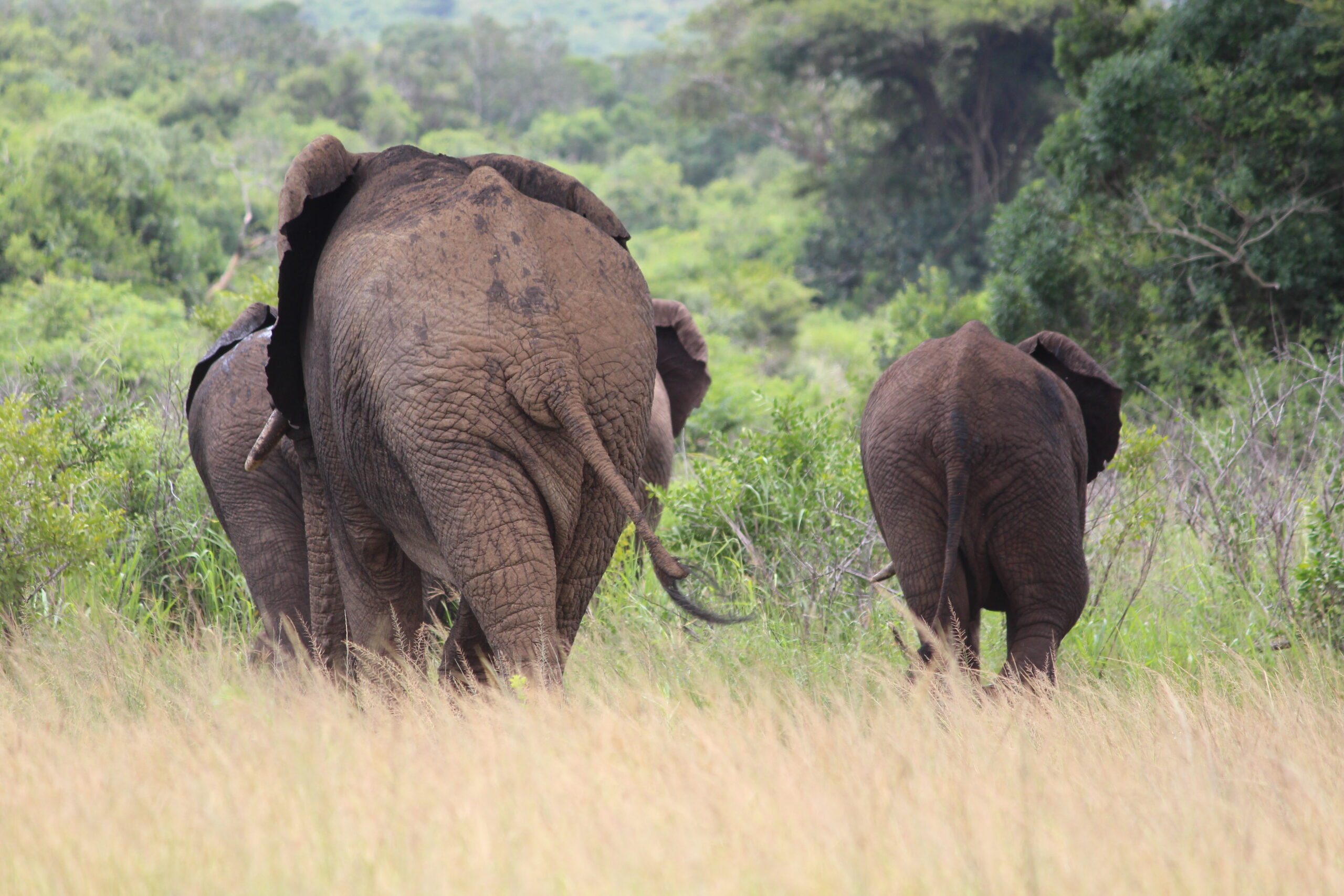
Some ellies, a pair of rhino, a rather intimidating roadblock, some mucky zebra, and more. All in all, not too bad for a morning in the park.

We stopped at Hilltop Camp for coffee before taking another loop back to Memorial Gate.

Did you know: 

The marula tree has a history that dates back thousands of years. Archaeological evidence has shown that this tree has been a nutritional source since about 10 000 BC. The marula fruit and nut are rich in minerals and vitamins.

A drink can be made from boiled marula fruit skin, or a coffee substitute can be made from burnt skin. The wood of the tree is soft and used for carving. Rope and light brown dye can be made from the bark. The bark also contains antihistamines and is therefore used for cleansing by steeping the bark in boiling water and inhaling the steam.
To treat dysentery and diarrhea, a piece of bark is squashed to a pulp, mixed with cold water and swallowed. It is also used as a preventative to malaria. The green leaves of the marula tree is eaten to alleviate heartburn.
There are one or two flavourful nuts inside the flesh of these insects which are rich in protein. The oil is also used as a skin cosmetic.


The green marula fruit is the size of a small plum, and very juicy and flavourful. It is high in vitamin C and can be eaten fresh. It is also cooked and used to produce juices, jams and alcoholic drinks.

Making marula jelly – Google will help you with a detailed recipe, but to summarise: wash the fruit, cut through the skin, soak overnight. Next day, boil in the same water, drain and squeeze out as much juice as possible. Measure 1 cup sugar for every cup of juice. Boil till it begins to set, and bottle as usual.
I’m also drying out the seeds to hopefully have myself a crunchy snack!

Marula trees are dioecious, meaning they have either male or female genders. The Venda believe that the bark can be used to tell the gender of an unborn child. Bark infusions of a male tree is taken by a pregnant woman if she wants a son, and from the female tree is she wishes for a daughter. If a child of the opposite gender is born, he or she is said to be special as they have defied the spirits.